12/24/21 (two 40-min. sessions): Focus on the women in space and satellite lifetime papers

AGENDA AND MINUTES

1. Updates:
  • MH paper. No updates.
  • Women in space project. HA showed an initial draft. SD will add the two graphs to it. DB will then do an iteration on the draft.
  • VJB research. We went through the figures and RS shared the document on his screen and we commented on some of them right in the document. Also added the abstract in that we have been commenting on recently.
  • PT research. Will present search stats next time.
  • Financials: FTC reimbursement.
  • Autograph! DB showed off the autograph he got.
  • Any students at one of our universities wanting a project that involves automatic checks on the planet4589 data files would be welcome. It is a useful type of project and students should find it to be an accessible, doable project.
  • Anything else?

2. Reading and discussion:
  • MH found this interesting graph: https://mobile.twitter.com/ns_whit/status/1471581216210145291
  • de Alcantara and Martens 2019. We finished up to the first full paragraph on p. 132 last time, so we will start there this time.
  • One of McDowell's yearly reports, available on the website.
  • A background paper related to the women in space project. See SpaceTravelMetric-b6-5-16\PapersAndPresentations\femaleAstronauts\relatedArticles 
  • https://noahpinion.substack.com/p/techno-optimism-for-2022
  • Future possibility: https://ourworldindata.org/technological-progress; Goldin et al., The Productivity Paradox, 2019.
  • James Pethokoukis, https://fasterplease.substack.com/, tech foresight blog by former Jeopardy! champ; Chad Jones, https://web.stanford.edu/~chadj/, writes about endogenous growth theory.

---------------------------------------Below are some ideas for future discussion-------------------
  • We found that the paper at https://link.springer.com/chapter/10.1007/978-3-030-40896-1_3 seems like a good paper for us to read.
  • MH suggests a short book called Future Spaceflight Meditations, a cosmist perspective, by Jiulio Prisco, physicist formerly with the ESA.
  • MH suggests Pantelis Koutroumpis, The Productivity Paradox, a report.

3. Background literature update.
  • Some interesting videos are at the Kartik Gada channel such as at https://www.youtube.com/channel/UCuRX67CJhaOT98Jdjh85CEQ which we discussed previously.
  • For general reference here are some generic questions about articles (and videos):
    • What is the source?
    • What is the most significant advance in the human knowledge presented in the paper?
    • Why is that advance important?
    • What important questions arise from the paper for future research?
    • What important questions would it be nice if the paper answered, but does not answer?
    • What does the paper present that is novel (no one else has provided that before)?
    • What is the relevance of the paper to our satellite research goals?
    • Questions from the group?


12/17/21: Regular meeting canceled; notes on another meeting instead

DB met in the Boston area with our contact to discuss the data

Here are some notes from the meeting.
  • A way to deal mathematically with things that have no upper bound, like lifetimes of spacecraft that are still operating, is the Kaplan-Meier bound or Kaplan-Meier approximation.
  • The problem of overfitting might be addressed in part using PCA. 
  • A problem with the half life approach is that a satellite might remain indefinitely in a non-failed status simply because definite information about failure never arrives. We should feel free to ask about specific cases, but this makes sense more for high value data points like for the interplanetary exploration project than for Earth satellites.
  • What is a flyby? One way to define this a "Hill sphere" which is the approximately spherical shell around a body which is the boundary between where its gravity predominates and where the gravity of another body predominates. Lagrangian points would be on this sphere, if I understand correctly.
  • When time between launches gets too high, personnel turnover prevents experience in one launch from helping the next launch, so failure rates will tend to increase.
  • Satellite S25744 is one where the end date is very vague, "2010s?" How does VJB handle that one?
  • Last known radio contact with satellites is a key data point in determining lifetimes. Tilley is someone who has valuable primary data of this time. 
  • Date formats are often of necessity vague. See planet4589.org/space/gcat/web/intro/vague.html for one way to do it.
  • Why not do automatic outlier detection of individual fields and of relations among fields as a way to identify errors? Maybe a student could be found who is interested in doing this. Kratschmann is interested in error detection on this data set and might be worth tracking down if such a student is found. Maybe he already does it that way?
  • Lifetimes are often affected by more or less imponderable or highly domain specific considerations. For example TRW makes good spacecraft, while some other manufacturers make spacecraft that are less durable. There is a maker in Russia that has made a lot of craft of lower quality. Satellites launched by universities are less reliable, potentially, because some of them are designed by students (as a conjecture).


12/10/21: Statuses and reading

      AGENDA  AND  MINUTES

  1. Updates:   

  • MH paper. No word.
  • Women in space project. HA got papers by interlibrary loan. Plan is to put draft in a Google doc that we can all see.
  • VJB research. Next week we will go through the figures and look at them and decide which goes in which paper. RS will share screen for this purpose.
  • PT research. Will present search stats next time. 
  • Not exponential!
  • was:
  • now:  

  • Financials: FTC reimbursement. 
  • Anything else? 

2. Reading and discussion:

  • de Alcantara and Martens 2019. We finished up to the first full paragraph  on p. 132, so we will start there next time.
  • One of McDowell's yearly reports, available on the website.
  • https://noahpinion.substack.com/p/techno-optimism-for-2022

---------------------------------------Below are some ideas for future discussion-------------------

  • We found that the paper at https://link.springer.com/chapter/10.1007/978-3-030-40896-1_3 seems like a good paper for us to read.
  • MH suggests a short book called Future Spaceflight Meditations, a cosmist perspective, by Jiulio Prisco, physicist formerly with the ESA.
  • MH suggests Pantelis Koutroumpis, The Productivity Paradox, a report.

3. Background literature update.

  • Some interesting videos are at the Kartik Gada channel such as  at https://www.youtube.com/channel/UCuRX67CJhaOT98Jdjh85CEQ which we discussed previously.
  • For general reference here are some generic questions about articles (and videos):

What is the source?
What is the most significant advance in the human knowledge presented in the paper? 
Why is that advance important?
What important questions arise from the paper for future research?
What important questions would it be nice if the paper answered, but does not answer? 
What does the paper present that is novel (no one else has provided that before)? 
What is the relevance of the paper to our satellite research goals?
Questions from the group?


12/10/21: Mostly updates, some reading discussion

      AGENDA  AND  MINUTES

  1. Updates:   

  • MH paper. No word.
  • Women in space project. HA got papers by interlibrary loan. Plan is to put draft in a Google doc that we can all see.
  • VJB research. Next week we will go through the figures and look at them and decide which goes in which paper. RS will share screen for this purpose.
  • PT research. Will present search stats next time. 
  • Not exponential!
  • Financials: FTC reimbursement. 
  • Anything else? 

2. Reading and discussion:

---------------------------------------Below are some ideas for future discussion-------------------

  • We found that the paper at https://link.springer.com/chapter/10.1007/978-3-030-40896-1_3 seems like a good paper for us to read.
  • MH suggests a short book called Future Spaceflight Meditations, a cosmist perspective, by Jiulio Prisco, physicist formerly with the ESA.
  • MH suggests Pantelis Koutroumpis, The Productivity Paradox, a report.

3. Background literature update.

  • Some interesting videos are at the Kartik Gada channel such as  at https://www.youtube.com/channel/UCuRX67CJhaOT98Jdjh85CEQ which we discussed previously.
  • For general reference here are some generic questions about articles (and videos):

What is the source?
What is the most significant advance in the human knowledge presented in the paper? 
Why is that advance important?
What important questions arise from the paper for future research?
What important questions would it be nice if the paper answered, but does not answer? 
What does the paper present that is novel (no one else has provided that before)? 
What is the relevance of the paper to our satellite research goals?
Questions from the group?


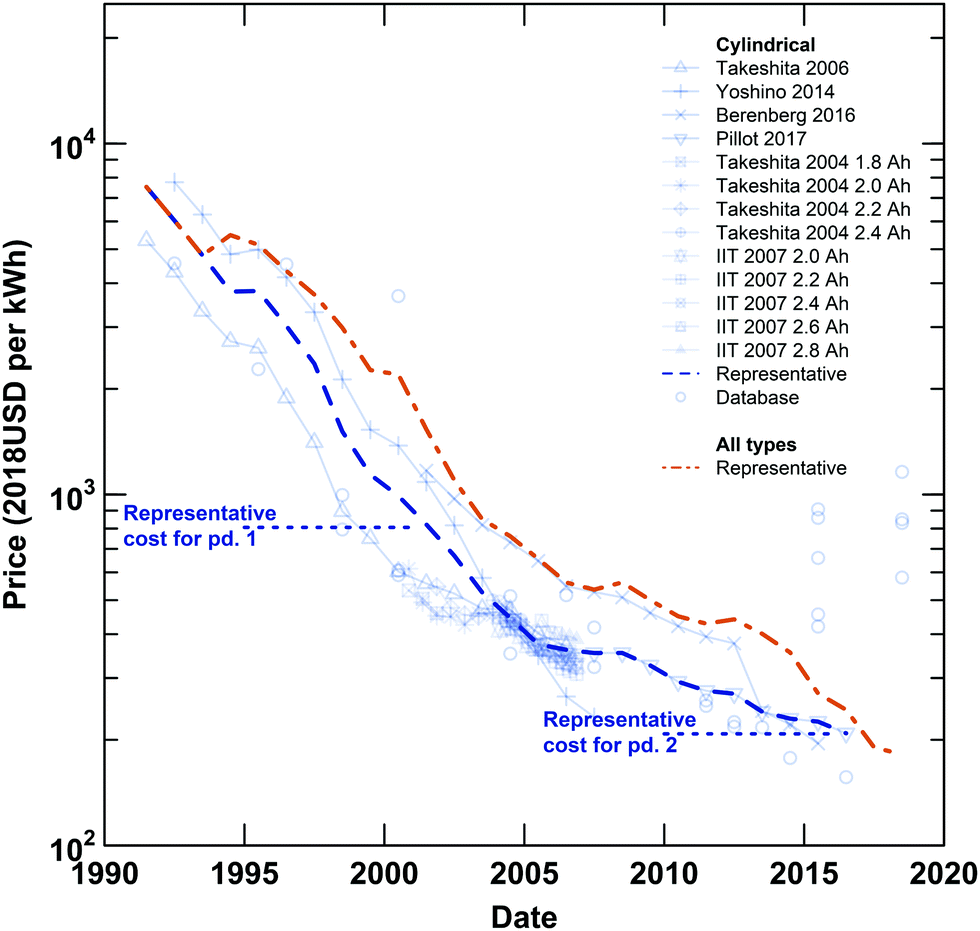
12/3/21: Reading on lithium ion technological advancement

     AGENDA  AND  MINUTES

  1. Updates:   

  • MH paper. 
  • Women in space project. 
  • VJB research. 
  • PT research. 
  • Financials: FTC reimbursement. 
  • Anything else? 

2. Reading and discussion:

---------------------------------------Below are some ideas for future discussion-------------------

  • We found that the paper at https://link.springer.com/chapter/10.1007/978-3-030-40896-1_3 seems like a good paper for us to read.
  • MH suggests a short book called Future Spaceflight Meditations, a cosmist perspective, by Jiulio Prisco, physicist formerly with the ESA.
  • MH suggests Pantelis Koutroumpis, The Productivity Paradox, a report.

3. Background literature update.

  • Some interesting videos are at the Kartik Gada channel such as  at https://www.youtube.com/channel/UCuRX67CJhaOT98Jdjh85CEQ which we discussed previously.
  • For general reference here are some generic questions about articles (and videos):

What is the source?
What is the most significant advance in the human knowledge presented in the paper? 
Why is that advance important?
What important questions arise from the paper for future research?
What important questions would it be nice if the paper answered, but does not answer? 
What does the paper present that is novel (no one else has provided that before)? 
What is the relevance of the paper to our satellite research goals?
Questions from the group?


11/26/21: Updates and reading

    AGENDA  AND  MINUTES

  1. Updates: 

  • MH paper. No news.
  • Women in space project. Lit. search in progress. Problem statement: discuss the proportion, how it changes over time, and future predictions based on the trend.
  • VJB research. Away visiting relatives. 
  • Congratulations to RS for moving his edited book forward. It is about bioinformatics.
  • PT research. Continuing with systematic literature review, expect to finish in a week or two, tentatively.
  • Financials.
    • FTC reimbursement. No news.
  • Anything else? No

2. Reading and discussion:

---------------------------------------Below are some ideas for future discussion-------------------

  • We found that the paper at https://link.springer.com/chapter/10.1007/978-3-030-40896-1_3 seems like a good paper for us to read.
  • MH suggests a short book called Future Spaceflight Meditations, a cosmist perspective, by Jiulio Prisco, physicist formerly with the ESA.
  • MH suggests Pantelis Koutroumpis, The Productivity Paradox, a report.

3. Background literature update.

  • Some interesting videos are at the Kartik Gada channel such as  at https://www.youtube.com/channel/UCuRX67CJhaOT98Jdjh85CEQ which we discussed previously.
  • For general reference here are some generic questions about articles (and videos):

What is the source?
What is the most significant advance in the human knowledge presented in the paper? 
Why is that advance important?
What important questions arise from the paper for future research?
What important questions would it be nice if the paper answered, but does not answer? 
What does the paper present that is novel (no one else has provided that before)? 
What is the relevance of the paper to our satellite research goals?
Questions from the group?


11/19/21: Readings and updates

   AGENDA  AND  MINUTES

  1. Updates: 

  • MH paper. No news is probably good news.
  • Women in space project. 
  • VJB research. 
  • PT research. 
  • Financials. 
    • PT paid $400 for FTC and the college agreed to reimburse him for it after the conference. 11/19/21: the college has not reimbursed yet but the form has been signed and is in process.
  • Anything else? Discuss StarLink. 
  • We *will* meet next week (for those who can make it), and Happy Thanksgiving.

2. Reading and discussion:

---------------------------------------Below are some ideas for future discussion----------------------

  • We found that the paper at https://link.springer.com/chapter/10.1007/978-3-030-40896-1_3 seems like a good paper for us to read.
  • MH suggests a short book called Future Spaceflight Meditations, a cosmist perspective, by Jiulio Prisco, physicist formerly with the ESA.
  • MH suggests Pantelis Koutroumpis, The Productivity Paradox, a report.

3. Background literature update.

  • Some interesting videos are at the Kartik Gada channel such as  at https://www.youtube.com/channel/UCuRX67CJhaOT98Jdjh85CEQ which we discussed previously.
  • For general reference here are some generic questions about articles (and videos):

What is the source?
What is the most significant advance in the human knowledge presented in the paper? 
Why is that advance important?
What important questions arise from the paper for future research?
What important questions would it be nice if the paper answered, but does not answer? 
What does the paper present that is novel (no one else has provided that before)? 
What is the relevance of the paper to our satellite research goals?
Questions from the group?


8/2/24: Last stop! All passengers please disembark.

 The Human Race Into Space Requires Kidneys, and Other Important Topics              A research and discussion group              Agen...