7/8/22: Upcoming submittals; readings

AGENDA AND MINUTES

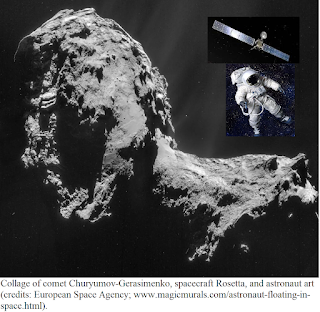
Fun photos:


1. Updates:
  • RS, VJB: Conference will be July 12 - 15, 2022. VJB's recording will used.
  • PT: Submitted to TS. Awaiting authorization from the coauthors to proceed.
  • MH: Currently summarizing studies on technology progress. There is a need to focus. Finished a section on semi-endogenous growth theory.
  • HA:
    • Figure numbers were too small. PT fixed the problem.
    • How to prevent version branching and merge problems.
      • Google docs
      • Github
      • Checking out/in (signing out/in, taking possession of/returning) the file from the email thread
    • Do updated S-curve figure in early 2023 with 2022 data and submit short to thespacereview.com?
  • DB: No updates. 11th Southeast Symposium on Contemporary Engineering Topics (SSCET) will be on Friday, September 16th in Little Rock, in the UALR EIT building. DB will list everyone as co-presenters.
  • Lunar calendar for 2022. This is a new potential hiccup in developing a Moore's law for deep space vessel lifetimes.
    • CAPSTONE, a 12-unit CubeSat, lunar orbiter with 9-month planned lifetime, launched this week after delays. Lost communication, but it was noted that the launch vehicle Lunar Photon may substitute: https://spacenews.com/capstone-suffers-communications-problem. But comm reestablished a day or two later, delaying the next phase of the mission a little but not a serious problem.
    • Artemis 1 mission (uses expendable launch vehicle; to launch "no earlier than" Aug.
      • Payload: Orion capsule with no crew, will not be reused, and short lifetime of 25 days ending in reentry and recovery
        • Contents: instruments, etc.
      • Payloads: Multiple CubeSats including JAXA's OMOTENASHI
    • CLPS-1 (Peregrine Mission One), launching in Q4 2022
      • Payload: Peregrine lander with short lifetime
        • Contents: rovers, instruments, etc. with longer lifetimes
    • CLPS-2 (IM-1) (Intuitive Machines 1), launching Dec. 22
      • Payload: Nova-C lander (lifetime: 1 lunar day)
        • Contents: instruments, rover, CubeSat camera
      • DOGE 1 (CubeSat)
      • Lunar Flashlight (CubeSat)
    • Luna 25, launching Sept. (doubtful?) by Russia
    • Smart Lander for Investigating Moon (SLIM), JAXA vessel launching in 2022, short lifetime of 2-3 weeks in orbit and several days after landing
2. Reading and discussion
  • In depth reading: "A Forgotten Moment in Physiology: the Lovelace Woman in Space Program (1960-1962)", 2009, ...\femaleAstronauts\relatedArticles\WomenInSpaceRef3.pdf. Vote was 4.
    • We read up to near the end of p. 160 where a new paragraph starts, so we can start there next time.
  • Possible readings/videos that have not yet been scanned and voted on. Read/view paragraph/minute or two of each and vote: Should we read it in more depth? 5=strongly agree, 4=agree, 3=neutral, 2=disagree, 1=strongly disagree.
    • https://www.theatlantic.com/science/archive/2019/07/we-need-new-science-progress/594946
    • https://www.planet4589.org. Scan one link deep from the astronautics page at https://planet4589.org/space/index.html. Don't read large documents through entirely.
    • One of McDowell's *yearly* (not the more frequent news) reports, in particular, the most recent one: https://planet4589.org/space/papers/space20.pdf. 
    • Goldin et al., The Productivity Paradox, 2019.
    • https://noahpinion.substack.com/p/techno-optimism-for-2022
    • James Pethokoukis, https://fasterplease.substack.com/, tech foresight blog by former Jeopardy! champ.
    • Chad Jones, https://web.stanford.edu/~chadj/, writes about endogenous growth theory.
    • Pantelis Koutroumpis, The Productivity Paradox, a report.
    • Some interesting videos are at the Kartik Gada channel such as at https://www.youtube.com/channel/UCuRX67CJhaOT98Jdjh85CEQ which we discussed previously.
    • Future Spaceflight Meditations, a cosmist perspective, by Jiulio Prisco, physicist formerly with the ESA.
  • Readings that we previously scanned and voted on that might or might not be read in more depth at some point. Listed in decreasing order of vote score. 
    • Already voted on: Portland International Conference on Management of Engineering and Technology. Let's find out more about it. We skimmed https://www.picmet.org/main/ and the question next is whether we want to read through the site in more detail. Do we search this site for another paper/papers to read? Vote was 3 11/12.
    • Already voted on. We found that the paper at https://link.springer.com/chapter/10.1007/978-3-030-40896-1_3 seems like it might be a good paper for us to read. Vote was 3.9.
    • Already voted on: One candidate: https://hrcak.srce.hr/file/394111 is a recent account of using DEA (which is part of TFDEA). We rechecked the abstract and read the first paragraph. Votes were: 3,5,2,5,4, averaging 3.8. 
    • 5/20/22: We read the enlarged font paragraph at the beginning of "Women's Place in Space Exploration, 1996, ...\femaleAstronauts\relatedArticles\WomenPlaceInSpaceExplorationRef2.pdf. Vote was 3 1/3.
    • Already voted on: The Institute for Progress. They address questions like what policies and social factors affect technological progress. We will try out a bit of https://progress.institute/immigration-powers-american-progress/ to see if we want to read it in full. Vote was 3 2/7.
    • Voted on 4/15/22: One of McDowell's update reports, available on the website. Link is: https://planet4589.org/space/jsr/jsr.html. We checked #804. Vote was 3 1/12.
  • For general reference here are some generic questions about articles (and videos):
    • What is the source?
    • What is the most significant advance in the human knowledge presented in the paper?
    • Why is that advance important?
    • What important questions arise from the paper for future research?
    • What important questions would it be nice if the paper answered, but does not answer?
    • What does the paper present that is novel (no one else has provided that before)?
    • What is the relevance of the paper to our satellite research goals?
    • Questions from the group?


7/1/22: Updates and reading

AGENDA AND MINUTES

Fun photos:


Lava River Cave, in Coconino National Forest, Flagstaff, AZ. Lava caves have been proposed as sites of extraterrestrial colonies.

1. Updates:
  • RS, VJB: Conference will be in the 2nd week of July. VJB's recording will used.
  • PT: Will send the current draft to the group by email for comments, if any. Plan is to submit to TS.
  • MH: Currently summarizing studies on technology progress. New Things Under the Sun site has lots of stuff. There is a need to focus. This is true for any literature review.
  • HA, DB: Conclusion is now drafted so the full draft is there. Everyone is invited to recheck it. DB will do a revision iteration next.
    • Here is the link:
      • https://www.google.com/search?q=scholarly+paper+conclusion+vs+discussion+section&rlz=1C1GCEA_enUS917US917&oq=scholarly+paper+conclusion+vs+discussion+section&aqs=chrome..69i57j33i160l3.15448j1j7&sourceid=chrome&ie=UTF-8
    • DB suggested dividing it into two papers, one with all the details and one with the core elements. POAS is one of our targets, due Aug. 15.
      • JS contribution needs?
  • Upcoming: 11th Southeast Symposium on Contemporary Engineering Topics (SSCET) will be on Friday, September 16th in Little Rock, in the UALR EIT building. DB will list everyone as co-presenters.
  • Lunar exploration status summary for 2022. This is a new potential hiccup in developing a Moore's law for deep space vessel lifetimes.
    • CAPSTONE, a 12-unit CubeSat, lunar orbiter with 9-month planned lifetime, launched this week after delays.
    • Artemis 1 mission (uses expendable launch vehicle; to launch "no earlier than" Aug.
      • Payload: Orion capsule with no crew, will not be reused, and short lifetime of 25 days ending in reentry and recovery
        • Contents: instruments, etc.
      • Payloads: Multiple CubeSats including JAXA's OMOTENASHI
    • CLPS-1 (Peregrine Mission One), launching in Q4 2022
      • Payload: Peregrine lander with short lifetime
        • Contents: rovers, instruments, etc. with longer lifetimes
    • CLPS-2 (IM-1) (Intuitive Machines 1), launching Dec. 22
      • Payload: Nova-C lander (lifetime: 1 lunar day)
        • Contents: instruments, rover, CubeSat camera
      • DOGE 1 (CubeSat)
      • Lunar Flashlight (CubeSat)
    • Luna 25, launching Sept. (doubtful?) by Russia
    • Smart Lander for Investigating Moon (SLIM), JAXA vessel launching in 2022, short lifetime of 2-3 weeks in orbit and several days after landing
2. Reading and discussion
  • In depth reading: "A Forgotten Moment in Physiology: the Lovelace Woman in Space Program (1960-1962)", 2009, ...\femaleAstronauts\relatedArticles\WomenInSpaceRef3.pdf. Vote was 4.
    • We read up to section "Candidate Testing" on p. 160 and can start there next time.
  • Possible readings/videos that have not yet been scanned and voted on. Read/view paragraph/minute or two of each and vote: Should we read it in more depth? 5=strongly agree, 4=agree, 3=neutral, 2=disagree, 1=strongly disagree.
    • https://www.theatlantic.com/science/archive/2019/07/we-need-new-science-progress/594946
    • https://www.planet4589.org. Scan one link deep from the astronautics page at https://planet4589.org/space/index.html. Don't read large documents through entirely.
    • One of McDowell's *yearly* (not the more frequent news) reports, in particular, the most recent one: https://planet4589.org/space/papers/space20.pdf. 
    • Goldin et al., The Productivity Paradox, 2019.
    • https://noahpinion.substack.com/p/techno-optimism-for-2022
    • James Pethokoukis, https://fasterplease.substack.com/, tech foresight blog by former Jeopardy! champ.
    • Chad Jones, https://web.stanford.edu/~chadj/, writes about endogenous growth theory.
    • Pantelis Koutroumpis, The Productivity Paradox, a report.
    • Some interesting videos are at the Kartik Gada channel such as at https://www.youtube.com/channel/UCuRX67CJhaOT98Jdjh85CEQ which we discussed previously.
    • Future Spaceflight Meditations, a cosmist perspective, by Jiulio Prisco, physicist formerly with the ESA.
  • Readings that we previously scanned and voted on that might or might not be read in more depth at some point. Listed in decreasing order of vote score. 
    • Already voted on: Portland International Conference on Management of Engineering and Technology. Let's find out more about it. We skimmed https://www.picmet.org/main/ and the question next is whether we want to read through the site in more detail. Do we search this site for another paper/papers to read? Vote was 3 11/12.
    • Already voted on. We found that the paper at https://link.springer.com/chapter/10.1007/978-3-030-40896-1_3 seems like it might be a good paper for us to read. Vote was 3.9.
    • Already voted on: One candidate: https://hrcak.srce.hr/file/394111 is a recent account of using DEA (which is part of TFDEA). We rechecked the abstract and read the first paragraph. Votes were: 3,5,2,5,4, averaging 3.8. 
    • 5/20/22: We read the enlarged font paragraph at the beginning of "Women's Place in Space Exploration, 1996, ...\femaleAstronauts\relatedArticles\WomenPlaceInSpaceExplorationRef2.pdf. Vote was 3 1/3.
    • Already voted on: The Institute for Progress. They address questions like what policies and social factors affect technological progress. We will try out a bit of https://progress.institute/immigration-powers-american-progress/ to see if we want to read it in full. Vote was 3 2/7.
    • Voted on 4/15/22: One of McDowell's update reports, available on the website. Link is: https://planet4589.org/space/jsr/jsr.html. We checked #804. Vote was 3 1/12.
  • For general reference here are some generic questions about articles (and videos):
    • What is the source?
    • What is the most significant advance in the human knowledge presented in the paper?
    • Why is that advance important?
    • What important questions arise from the paper for future research?
    • What important questions would it be nice if the paper answered, but does not answer?
    • What does the paper present that is novel (no one else has provided that before)?
    • What is the relevance of the paper to our satellite research goals?
    • Questions from the group?


6/24/22: Continued updates and reading

 AGENDA AND MINUTES

Fun photos: In Biosphere 2, AZ.


1. Updates:

  • RS, VJB: ASU will presumably pay the conf. reg. fee and has asked RS for some more detailed information. Conference will be in the 2nd week of July.
  • PT: Writing proposal now. SLR is in DB's hands now. Luna 15 mass data brouhaha: my preliminary data was incomplete/not right.
  • MH: Currently summarizing studies on technology progress.
  • HA, DB: Conclusion is now drafted so the full draft is there. Everyone is invited to recheck it. DB will do a revision iteration next.
    • Here is the link:
      • https://www.google.com/search?q=scholarly+paper+conclusion+vs+discussion+section&rlz=1C1GCEA_enUS917US917&oq=scholarly+paper+conclusion+vs+discussion+section&aqs=chrome..69i57j33i160l3.15448j1j7&sourceid=chrome&ie=UTF-8
    • DB suggested dividing it into two papers, one with all the details and one with the core elements. POAS is one of our targets, due Aug. 15.
      • JS contribution needs?
  • Upcoming: 11th Southeast Symposium on Contemporary Engineering Topics (SSCET) will be on Friday, September 16th in Little Rock. DB will list everyone as co-presenters.
  • Lunar exploration summary for 2022. This is a new potential hiccup in developing a Moore's law for deep space vessel lifetimes.
    • Artemis 1 mission (uses expendable launch vehicle; to launch "no earlier than" Aug.
      • Payload: Orion capsule with no crew, will not be reused, and short lifetime of 25 days ending in reentry and recovery
        • Contents: instruments, etc.
      • Payloads: Multiple CubeSats including JAXA's OMOTENASHI
    • CLPS-1 (Peregrine Mission One), launching in Q4 2022
      • Payload: Peregrine lander with short lifetime
        • Contents: rovers, instruments, etc.
    • CAPSTONE, a 12-unit CubeSat, lunar orbiter with 9-month planned lifetime, launching June 25
    • CLPS-2 (IM-1) (Intuitive Machines 1), launching Dec. 22
      • Payload: Nova-C lander (lifetime: 1 lunar day)
        • Contents: instruments, rover, CubeSat camera
      • DOGE 1 (CubeSat)
      • Lunar Flashlight (CubeSat)
    • Luna 25, launching Sept. (doubtful?) by Russia
    • Smart Lander for Investigating Moon (SLIM), JAXA vessel launching in 2022, short lifetime of 2-3 weeks in orbit and several days after landing
2. Reading and discussion
  • In depth reading: "A Forgotten Moment in Physiology: the Lovelace Woman in Space Program (1960-1962)", 2009, ...\femaleAstronauts\relatedArticles\WomenInSpaceRef3.pdf. Vote was 4.
    • We read the second page and can start the 3rd page next time.
  • Possible readings/videos that have not yet been scanned and voted on. Read/view paragraph/minute or two of each and vote: Should we read it in more depth? 5=strongly agree, 4=agree, 3=neutral, 2=disagree, 1=strongly disagree.
    • https://www.planet4589.org. Scan one link deep from the astronautics page at https://planet4589.org/space/index.html. Don't read large documents through entirely.
    • One of McDowell's *yearly* (not the more frequent news) reports, in particular, the most recent one: https://planet4589.org/space/papers/space20.pdf. 
    • Goldin et al., The Productivity Paradox, 2019.
    • https://noahpinion.substack.com/p/techno-optimism-for-2022
    • James Pethokoukis, https://fasterplease.substack.com/, tech foresight blog by former Jeopardy! champ.
    • Chad Jones, https://web.stanford.edu/~chadj/, writes about endogenous growth theory.
    • Pantelis Koutroumpis, The Productivity Paradox, a report.
    • Some interesting videos are at the Kartik Gada channel such as at https://www.youtube.com/channel/UCuRX67CJhaOT98Jdjh85CEQ which we discussed previously.
    • Future Spaceflight Meditations, a cosmist perspective, by Jiulio Prisco, physicist formerly with the ESA.
  • Readings that we previously scanned and voted on that might or might not be read in more depth at some point. Listed in decreasing order of vote score. 
    • Already voted on: Portland International Conference on Management of Engineering and Technology. Let's find out more about it. We skimmed https://www.picmet.org/main/ and the question next is whether we want to read through the site in more detail. Do we search this site for another paper/papers to read? Vote was 3 11/12.
    • Already voted on. We found that the paper at https://link.springer.com/chapter/10.1007/978-3-030-40896-1_3 seems like it might be a good paper for us to read. Vote was 3.9.
    • Already voted on: One candidate: https://hrcak.srce.hr/file/394111 is a recent account of using DEA (which is part of TFDEA). We rechecked the abstract and read the first paragraph. Votes were: 3,5,2,5,4, averaging 3.8. 
    • 5/20/22: We read the enlarged font paragraph at the beginning of "Women's Place in Space Exploration, 1996, ...\femaleAstronauts\relatedArticles\WomenPlaceInSpaceExplorationRef2.pdf. Vote was 3 1/3.
    • Already voted on: The Institute for Progress. They address questions like what policies and social factors affect technological progress. We will try out a bit of https://progress.institute/immigration-powers-american-progress/ to see if we want to read it in full. Vote was 3 2/7.
    • Voted on 4/15/22: One of McDowell's update reports, available on the website. Link is: https://planet4589.org/space/jsr/jsr.html. We checked #804. Vote was 3 1/12.
  • For general reference here are some generic questions about articles (and videos):
    • What is the source?
    • What is the most significant advance in the human knowledge presented in the paper?
    • Why is that advance important?
    • What important questions arise from the paper for future research?
    • What important questions would it be nice if the paper answered, but does not answer?
    • What does the paper present that is novel (no one else has provided that before)?
    • What is the relevance of the paper to our satellite research goals?
    • Questions from the group?


6/17/22: Moore's law for lifetimes, etc.

AGENDA AND MINUTES

Fun photos: In Roswell, NM: (l) Statue of Robert Goddard and one of his rockets & a launch tower; (r) tourist shop.

1. Updates:

  • RS, VJB: Presentation has been uploaded to the site. ASU will pay the conf. reg. fee. Paper was uploaded a long time ago. Conference will be in the 2nd week of July.
  • PT: Writing proposal now. Working on verifying mass data. Finished a draft of a lit. review on quantitative methods for trend extrapolation.
  • MH: Currently summarizing studies on technology progress.
  • HA, DB: HA added more to the discussion section. Conclusion needs some more details.
    • https://plos.org/resource/how-to-write-conclusions/ gives some writing guidance for discussions and conclusions.
    • Also the link:
      • https://www.google.com/search?q=scholarly+paper+conclusion+vs+discussion+section&rlz=1C1GCEA_enUS917US917&oq=scholarly+paper+conclusion+vs+discussion+section&aqs=chrome..69i57j33i160l3.15448j1j7&sourceid=chrome&ie=UTF-8
    • HA has noted the new reference suggestions but needs to review and if appropriate cite them in order to include them in the references section. 
    • DB suggested dividing it into two papers, one with all the details and one with the core elements.
    • Forum(s) to be determined after article is done. HA may be able to present at a conference if we get something accepted. 
      • One set of possibilities is at the American Institute of Aeronautics and Astronautics - may have a conference we could submit it to. https://www.aiaa.org/events-learning/events has a long list of possibilities. 
      • OK Acad. of Sci. has submittal deadline of Aug. 15.
      • Feminist journal.
    • JS contribution needs. 
  • Upcoming: 11th Southeast Symposium on Contemporary Engineering Topics (SSCET) will be on Friday, September 16th in Little Rock. DB will list everyone as co-presenters.
  • Lunar exploration summary for 2022. This is a new potential hiccup in developing a Moore's law for deep space vessel lifetimes.
    • Artemis 1 mission (uses expendable launch vehicle; to launch "no earlier than" Aug.
      • Payload: Orion capsule with no crew, will not be reused, and short lifetime of 25 days ending in reentry and recovery
        • Contents: instruments, etc.
      • Payloads: Multiple CubeSats including JAXA's OMOTENASHI
    • CLPS-1 (Peregrine Mission One), launching in Q4 2022
      • Payload: Peregrine lander with short lifetime
        • Contents: rovers, instruments, etc.
    • CAPSTONE, a 12-unit CubeSat, lunar orbiter with 9-month planned lifetime, launching June 25
    • CLPS-2 (IM-1) (Intuitive Machines 1), launching Dec. 22
      • Payload: Nova-C lander (lifetime: 1 lunar day)
        • Contents: instruments, rover, CubeSat camera
      • DOGE 1 (CubeSat)
      • Lunar Flashlight (CubeSat)
    • Luna 25, launching Sept. (doubtful?) by Russia
    • Smart Lander for Investigating Moon (SLIM), JAXA vessel launching in 2022, short lifetime of 2-3 weeks in orbit and several days after landing
2. Reading and discussion
  • In depth reading: "A Forgotten Moment in Physiology: the Lovelace Woman in Space Program (1960-1962)", 2009, ...\femaleAstronauts\relatedArticles\WomenInSpaceRef3.pdf. Vote was 4.
    • We read the first page and can start the 2nd page (mid-paragraph) next time.
  • Possible readings/videos that have not yet been scanned and voted on. Read/view paragraph/minute or two of each and vote: Should we read it in more depth? 5=strongly agree, 4=agree, 3=neutral, 2=disagree, 1=strongly disagree.
    • https://www.planet4589.org. Scan one link deep from the astronautics page at https://planet4589.org/space/index.html. Don't read large documents through entirely.
    • One of McDowell's *yearly* (not the more frequent news) reports, in particular, the most recent one: https://planet4589.org/space/papers/space20.pdf. 
    • Goldin et al., The Productivity Paradox, 2019.
    • https://noahpinion.substack.com/p/techno-optimism-for-2022
    • James Pethokoukis, https://fasterplease.substack.com/, tech foresight blog by former Jeopardy! champ.
    • Chad Jones, https://web.stanford.edu/~chadj/, writes about endogenous growth theory.
    • Pantelis Koutroumpis, The Productivity Paradox, a report.
    • Some interesting videos are at the Kartik Gada channel such as at https://www.youtube.com/channel/UCuRX67CJhaOT98Jdjh85CEQ which we discussed previously.
    • Future Spaceflight Meditations, a cosmist perspective, by Jiulio Prisco, physicist formerly with the ESA.
  • Readings that we previously scanned and voted on that might or might not be read in more depth at some point. Listed in decreasing order of vote score. 
    • Already voted on: Portland International Conference on Management of Engineering and Technology. Let's find out more about it. We skimmed https://www.picmet.org/main/ and the question next is whether we want to read through the site in more detail. Do we search this site for another paper/papers to read? Vote was 3 11/12.
    • Already voted on. We found that the paper at https://link.springer.com/chapter/10.1007/978-3-030-40896-1_3 seems like it might be a good paper for us to read. Vote was 3.9.
    • Already voted on: One candidate: https://hrcak.srce.hr/file/394111 is a recent account of using DEA (which is part of TFDEA). We rechecked the abstract and read the first paragraph. Votes were: 3,5,2,5,4, averaging 3.8. 
    • 5/20/22: We read the enlarged font paragraph at the beginning of "Women's Place in Space Exploration, 1996, ...\femaleAstronauts\relatedArticles\WomenPlaceInSpaceExplorationRef2.pdf. Vote was 3 1/3.
    • Already voted on: The Institute for Progress. They address questions like what policies and social factors affect technological progress. We will try out a bit of https://progress.institute/immigration-powers-american-progress/ to see if we want to read it in full. Vote was 3 2/7.
    • Voted on 4/15/22: One of McDowell's update reports, available on the website. Link is: https://planet4589.org/space/jsr/jsr.html. We checked #804. Vote was 3 1/12.
  • For general reference here are some generic questions about articles (and videos):
    • What is the source?
    • What is the most significant advance in the human knowledge presented in the paper?
    • Why is that advance important?
    • What important questions arise from the paper for future research?
    • What important questions would it be nice if the paper answered, but does not answer?
    • What does the paper present that is novel (no one else has provided that before)?
    • What is the relevance of the paper to our satellite research goals?
    • Questions from the group?


6/10/2022: Starting up the meetings again!

 AGENDA AND MINUTES


Fun photo: Biosphere 2 (near Tucson, AZ)

1. Updates:

  • RS, VJB: Uploading opens on June 12, VJB will upload it using RS's acct. RS will also present a keynote there.
  • PT: Finished draft of SLR on quantitative techniques for technology forecasting, sent it to DB.
  • HA, DB: HA plans to draft the discussion and conclusion section(s) after which DB will do an iteration.
    • https://plos.org/resource/how-to-write-conclusions/ gives some writing guidance for discussions and conclusions.
    • Also the link:
      • https://www.google.com/search?q=scholarly+paper+conclusion+vs+discussion+section&rlz=1C1GCEA_enUS917US917&oq=scholarly+paper+conclusion+vs+discussion+section&aqs=chrome..69i57j33i160l3.15448j1j7&sourceid=chrome&ie=UTF-8
    • HA has noted the new reference suggestions but needs to review and if appropriate cite them in order to include them in the references section. 
    • DB suggested dividing it into two papers, one with all the details and one with the core elements.
    • Forum(s) to be determined after article is done. HA may be able to present at a conference if we get something accepted. 
      • One set of possibilities is at the American Institute of Aeronautics and Astronautics - may have a conference we could submit it to. https://www.aiaa.org/events-learning/events has a long list of possibilities. 
      • OK Acad. of Sci. has submittal deadline of Aug. 15.
      • Feminist journal.
    • JS contribution needs. 
  • Upcoming: 11th Southeast Symposium on Contemporary Engineering Topics (SSCET) will be on Friday, September 16th in Little Rock. DB will list everyone as co-presenters.
2. Reading and discussion
  • In-depth readings:https://ourworldindata.org/technological-change. We finished it!
  • Possible readings/videos that have not yet been scanned and voted on. Read/view paragraph/minute or two of each and vote: Should we read it in more depth? 5=strongly agree, 4=agree, 3=neutral, 2=disagree, 1=strongly disagree.
    • https://www.planet4589.org. Scan one link deep from the astronautics page at https://planet4589.org/space/index.html. Don't read large documents through entirely.
    • One of McDowell's *yearly* (not the more frequent news) reports, in particular, the most recent one: https://planet4589.org/space/papers/space20.pdf. 
    • Goldin et al., The Productivity Paradox, 2019.
    • https://noahpinion.substack.com/p/techno-optimism-for-2022
    • James Pethokoukis, https://fasterplease.substack.com/, tech foresight blog by former Jeopardy! champ.
    • Chad Jones, https://web.stanford.edu/~chadj/, writes about endogenous growth theory.
    • Pantelis Koutroumpis, The Productivity Paradox, a report.
    • Some interesting videos are at the Kartik Gada channel such as at https://www.youtube.com/channel/UCuRX67CJhaOT98Jdjh85CEQ which we discussed previously.
    • Future Spaceflight Meditations, a cosmist perspective, by Jiulio Prisco, physicist formerly with the ESA.
  • Readings that we previously scanned and voted on that might or might not be read in more depth at some point. Listed in decreasing order of vote score. 
    • 5/20/22: We read the first paragraph of "A Forgotten Moment in Physiology: the Lovelace Woman in Space Program (1960-1962)", 2009, ...\femaleAstronauts\relatedArticles\WomenInSpaceRef3.pdf. Vote was 4.
    • Already voted on: Portland International Conference on Management of Engineering and Technology. Let's find out more about it. We skimmed https://www.picmet.org/main/ and the question next is whether we want to read through the site in more detail. Do we search this site for another paper/papers to read? Vote was 3 11/12.
    • Already voted on. We found that the paper at https://link.springer.com/chapter/10.1007/978-3-030-40896-1_3 seems like it might be a good paper for us to read. Vote was 3.9.
    • Already voted on: One candidate: https://hrcak.srce.hr/file/394111 is a recent account of using DEA (which is part of TFDEA). We rechecked the abstract and read the first paragraph. Votes were: 3,5,2,5,4, averaging 3.8. 
    • 5/20/22: We read the enlarged font paragraph at the beginning of "Women's Place in Space Exploration, 1996, ...\femaleAstronauts\relatedArticles\WomenPlaceInSpaceExplorationRef2.pdf. Vote was 3 1/3.
    • Already voted on: The Institute for Progress. They address questions like what policies and social factors affect technological progress. We will try out a bit of https://progress.institute/immigration-powers-american-progress/ to see if we want to read it in full. Vote was 3 2/7.
    • Voted on 4/15/22: One of McDowell's update reports, available on the website. Link is: https://planet4589.org/space/jsr/jsr.html. We checked #804. Vote was 3 1/12.
  • For general reference here are some generic questions about articles (and videos):
    • What is the source?
    • What is the most significant advance in the human knowledge presented in the paper?
    • Why is that advance important?
    • What important questions arise from the paper for future research?
    • What important questions would it be nice if the paper answered, but does not answer?
    • What does the paper present that is novel (no one else has provided that before)?
    • What is the relevance of the paper to our satellite research goals?
    • Questions from the group?


6/4/22: No meeting, but a fun space-related photo

No meeting. However, here is a photo I took on 6/1/22 in Arizona, of Meteor Crater. It is almost 1 mile in diameter and 500 feet deep. It was made about 50,000 years ago.


5/20/22: Scan new readings; graduation video; etc.

AGENDA AND MINUTES

1. Updates:

  • Next week - no meeting, I and some others are not available. Have a good Memorial Day weekend.
  • Graduation!
  • SD. Graduated!
    • RS. VB will try compressing the video recording and send it to RS for uploading that way.
    • PT. Continuing on SLR, hope to finish in a week or so.
    • HA. Working on discussion & conclusion for the paper on the women in space project. 
      • https://plos.org/resource/how-to-write-conclusions/ gives some writing guidance for discussions and conclusions
      • Also the link:
        • https://www.google.com/search?q=scholarly+paper+conclusion+vs+discussion+section&rlz=1C1GCEA_enUS917US917&oq=scholarly+paper+conclusion+vs+discussion+section&aqs=chrome..69i57j33i160l3.15448j1j7&sourceid=chrome&ie=UTF-8
      • HA has noted the new reference suggestions but needs to review and if appropriate cite them in order to include them in the references section. 
      • DB suggested dividing it into two papers, one with all the details and one with the core elements.
      • Forum(s) to be determined after article is done. HA may be able to present at a conference if we get something accepted. 
        • One set of possibilities is at the American Institute of Aeronautics and Astronautics - may have a conference we could submit it to. https://www.aiaa.org/events-learning/events has a long list of possibilities. 
        • OK Acad. of Sci. has submittal deadline of Aug. 15.
        • Feminist journal.
      • JS contribution needs. 
    • (No report requested) Th 11th Southeast Symposium on Contemporary Engineering Topics (SSCET) will be on Friday, September 16th in Little Rock. DB will list everyone as co-presenters.
    2. Reading and discussion
    • Possible readings/videos that have not yet been scanned and voted on. Read/view paragraph/minute or two of each and vote: Should we read it in more depth? 5=strongly agree, 4=agree, 3=neutral, 2=disagree, 1=strongly disagree. 
      • Background paper(s) related to the women in space project. 
        • 5/20/22: We read the enlarged font paragraph at the beginning of "Women's Place in Space Exploration, 1996, ...\femaleAstronauts\relatedArticles\WomenPlaceInSpaceExplorationRef2.pdf. Vote was 3 1/3.
        • 5/20/22: We read the first paragraph of "A Forgotten Moment in Physiology: the Lovelace Woman in Space Program (1960-1962)", 2009, ...\femaleAstronauts\relatedArticles\WomenInSpaceRef3.pdf. Vote was 4.
    The meeting ended here.
      • https://www.planet4589.org. Scan one link deep from the astronautics page at https://planet4589.org/space/index.html. Don't read large documents through entirely.
      • One of McDowell's *yearly* (not the more frequent news) reports, in particular, the most recent one: https://planet4589.org/space/papers/space20.pdf. 
      • Goldin et al., The Productivity Paradox, 2019.
      • https://noahpinion.substack.com/p/techno-optimism-for-2022
      • James Pethokoukis, https://fasterplease.substack.com/, tech foresight blog by former Jeopardy! champ.
      • Chad Jones, https://web.stanford.edu/~chadj/, writes about endogenous growth theory.
      • Pantelis Koutroumpis, The Productivity Paradox, a report.
      • Some interesting videos are at the Kartik Gada channel such as at https://www.youtube.com/channel/UCuRX67CJhaOT98Jdjh85CEQ which we discussed previously.
      • Future Spaceflight Meditations, a cosmist perspective, by Jiulio Prisco, physicist formerly with the ESA.
    • In-depth readings:https://ourworldindata.org/technological-change. We discussed up to "Price changes in consumer goods and services in the USA" so we will start there next time. (Vote average was 4.4, but we can always re-vote as we go along.)
    • Readings that we previously scanned and voted on that might or might not be read in more depth at some point. Listed in decreasing order of vote score. 
      • 5/20/22: We read the first paragraph of "A Forgotten Moment in Physiology: the Lovelace Woman in Space Program (1960-1962)", 2009, ...\femaleAstronauts\relatedArticles\WomenInSpaceRef3.pdf. Vote was 4.
      • Already voted on: Portland International Conference on Management of Engineering and Technology. Let's find out more about it. We skimmed https://www.picmet.org/main/ and the question next is whether we want to read through the site in more detail. Do we search this site for another paper/papers to read? Vote was 3 11/12.
      • Already voted on. We found that the paper at https://link.springer.com/chapter/10.1007/978-3-030-40896-1_3 seems like it might be a good paper for us to read. Vote was 3.9.
      • Already voted on: One candidate: https://hrcak.srce.hr/file/394111 is a recent account of using DEA (which is part of TFDEA). We rechecked the abstract and read the first paragraph. Votes were: 3,5,2,5,4, averaging 3.8. 
      • 5/20/22: We read the enlarged font paragraph at the beginning of "Women's Place in Space Exploration, 1996, ...\femaleAstronauts\relatedArticles\WomenPlaceInSpaceExplorationRef2.pdf. Vote was 3 1/3.
      • Already voted on: The Institute for Progress. They address questions like what policies and social factors affect technological progress. We will try out a bit of https://progress.institute/immigration-powers-american-progress/ to see if we want to read it in full. Vote was 3 2/7.
      • Voted on 4/15/22: One of McDowell's update reports, available on the website. Link is: https://planet4589.org/space/jsr/jsr.html. We checked #804. Vote was 3 1/12.
      • For general reference here are some generic questions about articles (and videos):
        • What is the source?
        • What is the most significant advance in the human knowledge presented in the paper?
        • Why is that advance important?
        • What important questions arise from the paper for future research?
        • What important questions would it be nice if the paper answered, but does not answer?
        • What does the paper present that is novel (no one else has provided that before)?
        • What is the relevance of the paper to our satellite research goals?
        • Questions from the group?


      8/2/24: Last stop! All passengers please disembark.

       The Human Race Into Space Requires Kidneys, and Other Important Topics              A research and discussion group              Agen...